Introduction: Why Knowing Leather Types Matters
When shopping for a leather bag, the most important question isn't "How does it look?" — it's "What kind of leather is this?" The type of leather determines everything: how long your bag will last, how it ages, how to care for it, and whether you're getting real value for your money.
Unfortunately, leather terminology is one of the most misunderstood and misused areas in fashion. Terms like "genuine leather," "full-grain," and "top-grain" are often used interchangeably — but they mean completely different things. And the difference between a $50 "genuine leather" bag and a $300 full-grain leather bag isn't just branding — it's the leather itself.
This guide covers every major type of leather used in bags, how to identify each one, and which type is right for your needs.
1. The Leather Grades: A Quick Overview
Leather is categorized into four main grades, from highest to lowest quality:
| Grade | Quality | Durability | Price | Best For |
|---|---|---|---|---|
| Full-Grain | Highest | 20+ years | $$$ | Investment bags, heirloom pieces |
| Top-Grain | High | 10-15 years | $$ | Everyday designer bags |
| Genuine Leather | Medium-Low | 3-5 years | $ | Budget-friendly bags |
| Bonded Leather | Lowest | 1-3 years | $ | Avoid for bags |
2. Full-Grain Leather: The Gold Standard
What Is Full-Grain Leather?
Full-grain leather comes from the top layer of the hide, with all of its natural grain intact. The surface has not been sanded or buffed to remove imperfections. Every mark, wrinkle, and pore from the animal's life is visible — and that's the point.
Key characteristics:
- Natural grain and markings visible (not "perfect" looking)
- Develops a beautiful patina over time — the leather darkens and gains character with use
- Extremely durable: 20+ year lifespan with proper care
- Breathable and moisture-wicking
- Most expensive grade
- Thicker and stiffer initially, but softens with use
How to Identify Full-Grain Leather
- Look at the surface: You should see natural pores, grain patterns, and slight variations. No two pieces are identical.
- Smell it: Full-grain leather has a rich, natural leather smell — not chemical or plastic-like.
- Touch the back (if unlined): The underside should feel suede-like or fuzzy, not smooth or fabric-backed.
- Check the edge: Cut edges of full-grain leather show the natural fiber structure.
- Water test: A tiny drop of water on an inconspicuous area will slowly absorb and darken the leather slightly. If water beads up, the leather is heavily coated.
Best Uses
Full-grain leather is ideal for bags you want to keep for decades: heirloom handbags, premium backpacks, briefcases, and travel bags. At Regina, our core collection uses full-grain leather for this reason.
3. Top-Grain Leather: The Practical Premium Choice
What Is Top-Grain Leather?
Top-grain leather is the second-highest grade. It also comes from the top layer of the hide, but the surface has been sanded and buffed to remove natural imperfections. A finish coat is then applied, giving it a more uniform appearance.
Key characteristics:
- Smoother, more uniform surface than full-grain
- Lighter and more flexible than full-grain
- More stain-resistant due to the protective finish
- Less expensive than full-grain, but still high quality
- Does NOT develop the same rich patina as full-grain (the finish blocks natural aging)
- Lifespan: 10-15 years
Full-Grain vs Top-Grain: How to Choose
| Feature | Full-Grain | Top-Grain |
|---|---|---|
| Surface | Natural, varied grain | Smooth, uniform |
| Patina development | Excellent | Minimal |
| Stain resistance | Lower (absorbs) | Higher (coated) |
| Initial softness | Stiffer | Softer |
| Durability | 20+ years | 10-15 years |
| Price | Higher | Moderate |
| Water resistance | Low | Medium |
4. Genuine Leather: The Most Misunderstood Term
What "Genuine Leather" Actually Means
This is the most deceptive term in the leather industry. "Genuine leather" sounds like it means "real leather" — and technically it does. But in leather grading, "genuine leather" is the LOWEST grade of real leather. It's made from the layers left over after the top grain is split off. These leftover layers are bonded, pressed, and painted to look like higher-grade leather.
Key characteristics:
- Technically real leather, but the lowest quality grade
- Surface is heavily painted/coated — what you see is not the actual leather surface
- Does not develop patina
- Prone to cracking, peeling, and delamination after 3-5 years
- Very affordable
- Often stamped or embossed with fake grain patterns
How to Spot "Genuine Leather" Products
- Price: If a "leather" bag costs under $50, it's almost certainly genuine leather or lower
- Perfect grain pattern: If the grain looks too uniform and repeats, it's embossed
- Edge inspection: Genuine leather edges often look like compressed cardboard
- Smell: Often has a chemical or processed smell, not rich leather aroma
- The label itself: Products proudly labeled "GENUINE LEATHER" are often using the term deceptively. High-quality leather is labeled by its actual grade: "full-grain" or "top-grain"
5. Bonded Leather: What to Avoid
Bonded leather is made from leather scraps and dust that are ground up, mixed with adhesive, and pressed onto a fabric backing. It typically contains only 10-20% actual leather. Bonded leather bags look good for about a year before the surface begins cracking and peeling. At Regina, we strongly recommend avoiding bonded leather for any bag you plan to use regularly.
6. Types of Leather by Animal Source
Cowhide Leather
The most common leather for bags. Cowhide is thick, durable, and readily available. It's the standard for high-quality leather bags. Full-grain cowhide is the benchmark against which other leathers are measured.
Sheepskin Leather
Much softer and lighter than cowhide. Sheepskin leather has a buttery-soft texture and drapes beautifully, making it ideal for slouchy hobo bags and soft clutches. However, it's less durable than cowhide — sheepskin bags are more prone to scratching and stretching. Best for occasional-use fashion bags, not daily workhorses.
Lambskin Leather
Even softer than sheepskin. Lambskin is famously used by luxury brands like Chanel for its ultra-smooth, luxurious feel. It's the softest and most delicate leather — beautiful but high-maintenance. Expect scratches and wear to show quickly.
Goat Leather
Goat leather offers a unique combination of softness and durability. It has a distinctive pebbled grain pattern and is naturally water-resistant. Goat leather bags are uncommon in mainstream fashion but prized in artisanal and handmade markets for their unique texture.
Buffalo Leather
Extremely thick and tough. Buffalo leather has a pronounced, rugged grain pattern. It's heavier than cowhide and takes longer to break in, but it's nearly indestructible. Used for rugged bags, tool bags, and heavy-duty backpacks.
7. Specialty Leather Types
Saffiano Leather
Saffiano is not a grade of leather but a finishing process — originally from Prada. Cowhide leather is treated with a wax and pressed with a cross-hatch pattern, creating a scratch-resistant, water-resistant surface. Saffiano leather is popular for structured bags because it holds its shape and resists scuffs. The trade-off: it feels plasticky and doesn't develop patina.
Nubuck Leather
Made from the outer side of a hide (like full-grain), but buffed on the grain side to create a velvety surface. Nubuck looks and feels like suede but is more durable because it uses the stronger outer layer of the hide. It stains easily and requires special care.
Suede
Made from the underside (split) of the hide, giving it a soft, fuzzy texture on both sides. Suede is lightweight and flexible but stains easily and is difficult to clean. Best for occasional-use bags, not daily carry.
Patent Leather
Leather coated with a high-gloss lacquer or plastic finish. The shiny, mirror-like surface is iconic but the coating can crack over time. Patent leather cannot be conditioned (the coating prevents absorption) and requires special care. Best for evening bags and special occasions.
Pebbled Leather
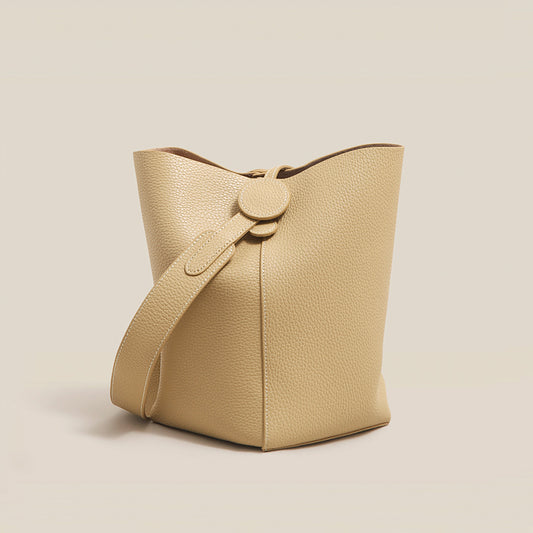
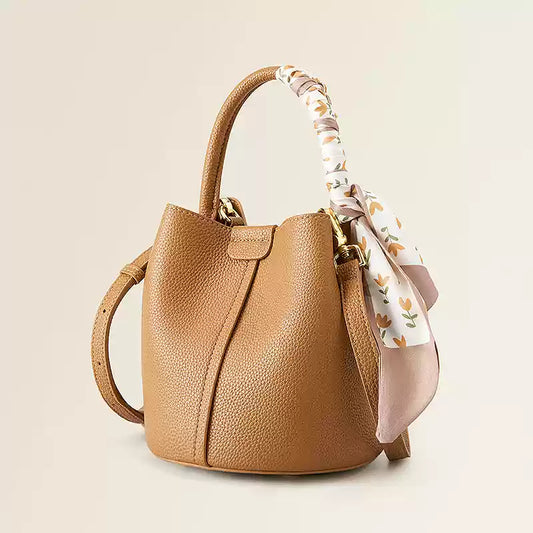
Not a separate leather type — pebbled leather is full-grain or top-grain leather that has been embossed with a pebble-like texture. The texture helps hide scratches and daily wear, making it popular for everyday bags.
Vegetable-Tanned Leather
A tanning method, not a leather grade. Vegetable-tanned (veg-tan) leather uses natural tannins from tree bark and plants instead of chemicals (chrome tanning). Veg-tan leather is the choice of artisans — it develops the richest patina of any leather and is environmentally friendlier. It starts stiff and caramel-colored and darkens beautifully with sun exposure and use.
8. Real Leather vs Faux (Vegan) Leather
What Is Faux/Vegan Leather?
Faux leather (also marketed as "vegan leather," "PU leather," or "pleather") contains no animal products. It's made from plastic-based materials — typically polyurethane (PU) or polyvinyl chloride (PVC) — applied to a fabric backing.
Real Leather vs Faux Leather: The Comparison
| Feature | Real Leather | Faux/Vegan Leather |
|---|---|---|
| Lifespan | 10-20+ years | 1-3 years |
| Aging | Develops patina, improves with age | Cracks, peels, degrades |
| Breathability | Breathable | Not breathable (plastic) |
| Environmental impact | Byproduct of food industry; biodegradable | Petroleum-based plastic; not biodegradable |
| Repair potential | Can be repaired and reconditioned | Cannot be repaired once damaged |
| Smell | Rich, natural leather scent | Chemical, plastic smell |
| Price | Higher upfront | Lower upfront (more expensive over time) |
"Vegan Leather" — Marketing Term or Real Alternative?
The term "vegan leather" is primarily a marketing rebranding of synthetic leather. While plant-based alternatives are emerging (mushroom leather, pineapple leather, apple leather), most "vegan leather" products on the market today are still PU or PVC plastic. A real leather bag that lasts 20 years may ultimately have less environmental impact than five faux leather bags that each last 2-3 years before being discarded.
How to Tell Real Leather from Faux Leather
- The burn test (for unlined edges): Real leather chars and smells like burnt hair. Faux leather melts and smells like burning plastic. Only do this on a hidden edge or swatch.
- The water test: A drop of water absorbs into real leather. It beads on faux leather.
- The touch test: Real leather warms up in your hand. Faux leather stays cool.
- The edge test: Real leather edges show fiber structure. Faux leather edges show fabric backing.
- The smell test: Real leather has a distinctive, rich smell. Faux leather smells like plastic or chemicals.
- The grain test: Real leather grain is irregular and unique. Faux leather grain is perfectly repetitive.
- The crease test: Press into real leather and it forms fine lines around the pressure point (like skin). Faux leather depresses uniformly or not at all.
9. Which Leather Type Should You Choose?
By Use Case
| Use Case | Recommended Leather |
|---|---|
| Daily work bag | Full-grain cowhide or top-grain (durable, ages well) |
| Evening bag / special occasions | Patent leather, lambskin, or Saffiano |
| Travel bag | Full-grain cowhide or buffalo (tough, weather-resistant) |
| Budget-friendly starter bag | Top-grain (good quality, lower price than full-grain) |
| Investment / heirloom piece | Full-grain vegetable-tanned (best patina, longest life) |
| Lightweight summer bag | Sheepskin or goatskin |
| Eco-conscious choice | Full-grain vegetable-tanned (biodegradable, byproduct of food) |
Price-Quality Cheat Sheet
- Under $50: Almost certainly bonded leather or faux leather
- $50-$100: Usually genuine leather (low grade)
- $100-$250: Top-grain leather is common in this range
- $250-$500: Full-grain leather or luxury-brand top-grain
- $500+: Should be full-grain or specialty leather (exotic, vegetable-tanned)
10. Quick Reference: Leather Type at a Glance
| Type | Durability | Softness | Patina | Care Level | Price |
|---|---|---|---|---|---|
| Full-Grain Cowhide | ★★★★★ | ★★★ | ★★★★★ | Medium | $$$ |
| Top-Grain | ★★★★ | ★★★★ | ★★ | Low | $$ |
| Genuine Leather | ★★ | ★★★ | ☆ | Low | $ |
| Sheepskin | ★★ | ★★★★★ | ★★★ | High | $$ |
| Lambskin | ★ | ★★★★★ | ★★★ | High | $$$ |
| Goat Leather | ★★★★ | ★★★★ | ★★★★ | Medium | $$ |
| Buffalo | ★★★★★ | ★ | ★★★ | Low | $$ |
| Saffiano | ★★★★ | ★★ | ☆ | Low | $$$ |
| Nubuck | ★★★ | ★★★★★ | ★★ | High | $$ |
| Suede | ★★ | ★★★★★ | ☆ | High | $ |
| Patent | ★★ | ★★ | ☆ | Medium | $$ |
| Veg-Tan Full-Grain | ★★★★★ | ★★ | ★★★★★ | Medium | $$$ |
| Faux/Vegan (PU/PVC) | ★ | ★★★ | ☆ | Low | $ |
This guide is maintained by Regina (leather-purse.com), makers of handmade full-grain leather bags. All our bags use full-grain and top-grain leather sourced from reputable tanneries. Have a question about leather types not covered here? Email us at support@leather-purse.com.
Last updated: June 2026